
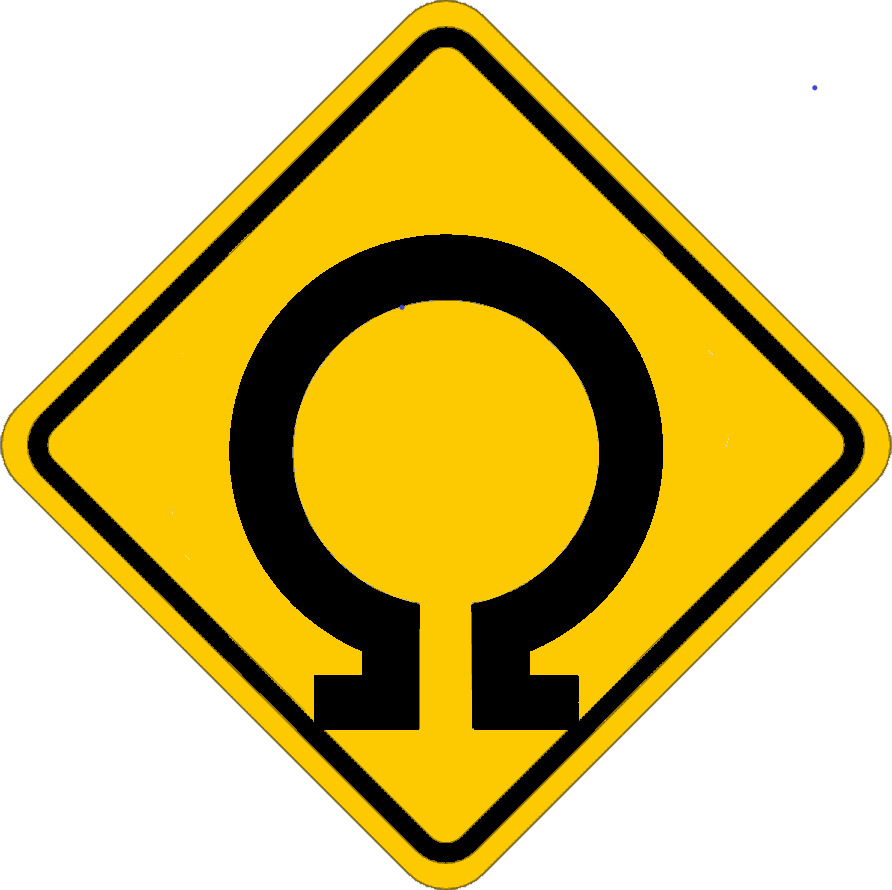
A Modern Roundabout Turnaround

Many rides of the bike club I ride with start in Lexington, Massachusetts, on the historic Battle Green at the intersection of Massachusetts Avenue, Bedford Street and Main Street. The intersection now boasts a modern roundabout. The bike-club rides usually head out Massachusetts Avenue, but many club cyclists pass through the roundabout on a bicycle, or in a motor vehicle carrying one. The roundabout is also a nexus for local bicycle travel.
Modern Roundabout Features
What makes a modern roundabout different from an old-style traffic circle? The small size and deflection (curving) at the entrances slow traffic. The off-tracking rear wheels of large trucks ride up onto a raised center island behind a sloping curb (the truck apron).
Lexington e-bike rider Omar Khudari invited me to check out the roundabout with him. How would it be on a bicycle?
We found the roundabout easy to ride. And it has a useful feature which you might overlook at first.
Going All the Way Around…
One unsung feature of a roundabout is that if you miss your exit, you can just go around again. But also, you can exit on the same street where you entered. We tried this. Omar on his ebike held his speed down to my slow pace. We rode all the way around. I recorded this with my front and rear cameras.
My son Jacob was going to drive his car to an appointment in Lexington, and I asked him to try making the full circuit of the roundabout with has dashcam running. Here is video from both the bike and the car. “U turn” doesn’t describe the maneuver. A letter from the Greek alphabet does it more justice.
As the video shows, you need to yield to traffic when entering the roundabout. After that, it’s smooth sailing because the entering traffic yields to you. Cyclists need to control the lane – ride in its center – in the narrow entry and exit roadways. Controlling the lane is also necessary in the circular roadway, to be where entering motorists look and where exiting ones will not cross in front of you. The geometry of a modern roundabout makes lane control easier than in the similarly small old-style rotary at Beaver and Lyman streets in neighboring Waltham, which I described in an earlier Savvy Cyclist post. The lanes in the Waltham rotary are wide, and a bicyclist must negotiate lane position before entering and exiting. CyclingSavvy strategies work there, but they are simpler in the Lexington roundabout.
Cars and Bicycles, Same Speed
I timed my circuit of the roundabout on my bicycle and Jacob’s circuit in the car. Both took 19 seconds.
The roundabout is the only place in downtown Lexington where it is convenient and practical to make a U turn – excuse me, omega turn – and from/to any of the four streets! In a car, before the roundabout was installed, you’d have to go around the block one way or another. On a bicycle, you would often have to do that too, or use a crosswalk. Cars match bicycle speed here, so it’s also stress-free!



Great video! Many of the roundabouts near me have bike paths surrounding it. The crosswalks that allow walkers and bikers to navigate the roundabout are somewhat narrow, at sharp angles to the roadway and positioned where it’s hard to see the traffic. My city road engineer said all of that is on purpose so that everyone (walkers and bikers) slow down enough to watch for cars. I think it’s slightly more dangerous since the bikers have to slow down dramatically and crane their necks to see. I would hop onto the road before the roundabout, but there is a tall curb. Sigh.
Don’t get me wrong. I love roundabouts since they are much much safer in a car. I wish they were designed better for bikes.
Sigh,
Randy Stegbauer
Hi Randy,
I think your observations are spot on. I encountered the same thing with some roundabouts in a town in Oregon. The bike/ped accommodations on the roundabout had the same issues you are describing. Fortunately, I didn’t have to deal with a curb to exit the bike lane and enter the vehicle travel lane to get through the roundabout. Those design features may be better for pedestrians but certainly not better for bicycles.
Sadly our university demolished about 6 or 7 roundabouts we had on our campus for decades and converted them all to traditional signalized intersections. The engineers behind the changes cited complaints from our campus office that represents people with disabilities who were concerned about blind people navigating them safely, that blind people can’t tell if motorists are yielding or continuing around the roundabout/ circle, which seemed like a valid concern at the time they started removing them, but I’ve since seen modern roundabouts with ped-activated signals to help sight-impaired people get thru them safely. Perhaps you could do a follow-up on how modern roundabouts can be friendly to all modes of travel someday?
Tim Potter
MSU Bikes
http://www.bikes.msu.edu
Have a look at the one at the University of California, Davis — https://vimeo.com/210193087.
Great info again John. Here’s a smart arse question: if entering traffic must yield to traffic in the circle can I just keep riding in circles to annoy the motorists?
Well… I have ridden around roundabouts and traffic circles multiple times to show my students how simple and easy it is to stay near the inside, away from the entrances and exits. I didn’t annoy anyone any more than I would normally, because everyone else still only had to yield to me once (or not at all), and exited before seeing me go around again. And if some motorist wanted to use a roundabout as a merry-go-round, it wouldn’t be a problem either, because motorists don’t go any faster than I do! Bicyclists have the advantage of leaning into turns, and so turns are more comfortable for us.