
High Speed Bicycling
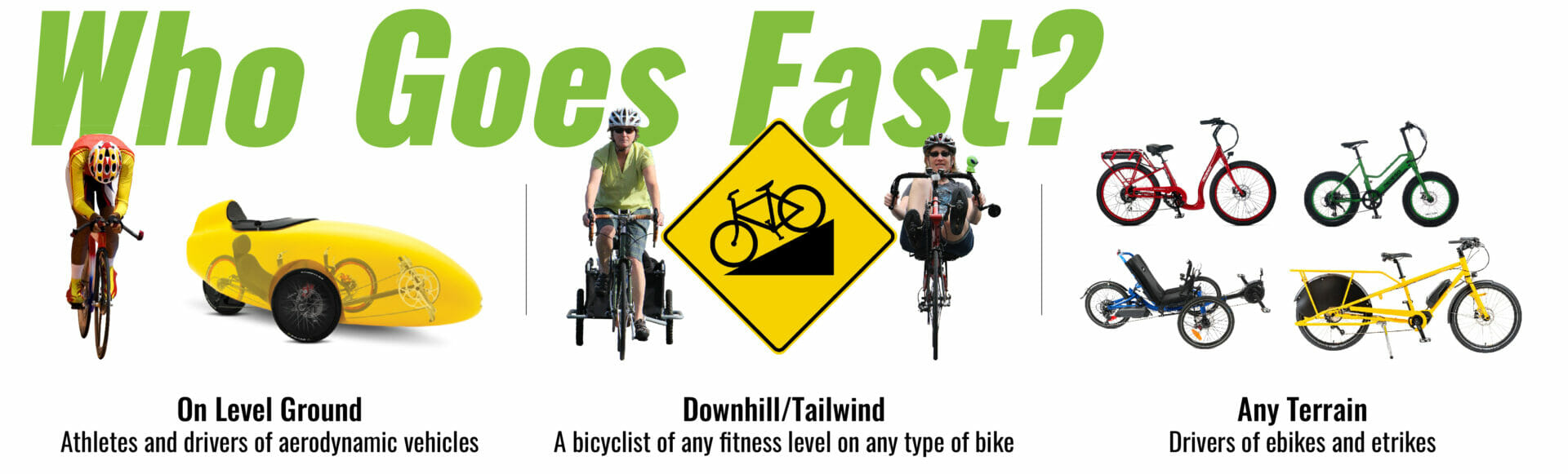
The faster you go, the faster you can get into trouble.
The biggest challenge for bicycling education is that people don’t think they need it. Most untrained bicyclists unknowingly expose themselves to crash risk. While slow-speed bicycling is remarkably forgiving, high-speed bicycling is much less so. Here’s why…
Time to Cognition

The generally understood time it takes to react to a hazard (known as perception and recognition time) is 2.5 seconds. When considering crash avoidance, we translate that time into distance traveled. This doesn’t include the additional distance needed to bring a vehicle to a stop. We’ll come back to that.
Two and a half seconds doesn’t seem like much, but what does it mean in terms of distance?
| Speed in Miles/Hour | Speed in Feet/Second | Distance Traveled in 2.5 Seconds |
|---|---|---|
| 10 mph | 14.7 fps | 37 feet |
| 20 mph | 29.3 fps | 73 feet |
| 25 mph | 36.7 fps | 92 feet |
Class 1 & 2 ebikes have an assisted top speed of 20 mph. Class 3 ebikes have an assisted top speed of 28 mph. Athletes frequently achieve these speeds as well. An average rider on any bicycle can go faster downhill or with a strong tailwind.
Stopping distance
Once the hazard is recognized, the emergency maneuver begins. Depending on the circumstance, a swerve or snap turn might be the chosen avoidance maneuver.
Or you might brake. If a full stop is required, the distance needed varies dramatically with vehicle weight, equipment type and condition, surface conditions, incline or decline of the road, and rider skill. The diagram below assumes a level, paved surface and appropriate, properly-maintained brakes.

You have to see it to react to it!
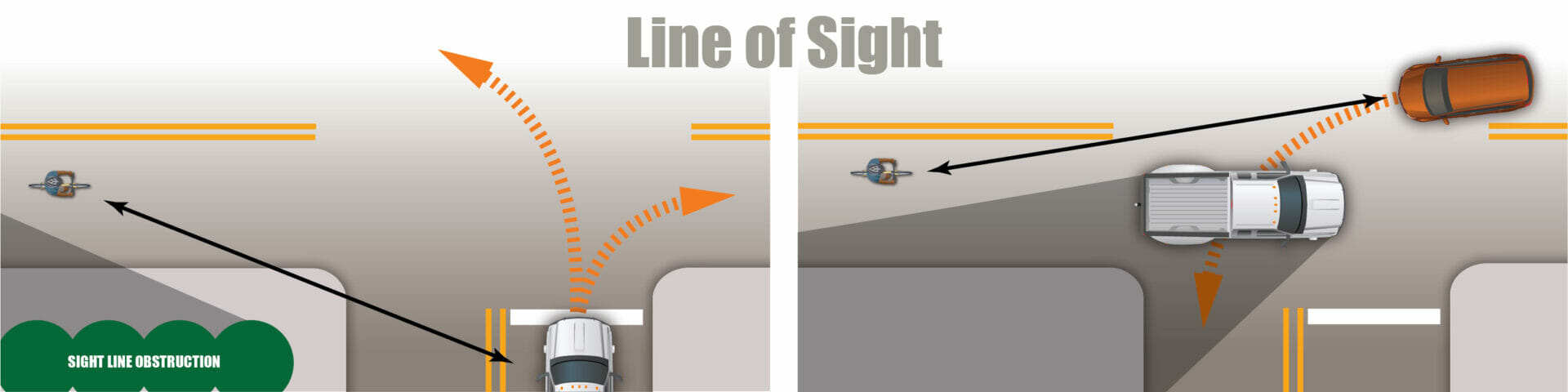
A longer stopping distance means a faster bicyclist needs a longer line of sight (known as stopping sight distance) to a potential conflict. How far can you see around a curve or over the crest of a hill? Can you see cars preparing to enter the road at a driveway or intersection? Are there obstructions such as poles, trees, fences, or parked cars? Can you see cars waiting to turn left ahead of you? This is the kind of situational awareness that keeps you safe.
See and be seen
Changing your position on the road can allow you to see potential hazards from a greater distance. It also makes you more visible to other road users.
Motorists misjudge speed
While it’s always good to maximize your visibility, being seen isn’t a fail-safe. Motorists often see bicyclists and pull in front of them anyway because they underestimate their speed. This is even more likely with an upright ebike and rider in street clothes. This makes it extra important that you have a clear line of sight to motor vehicles. Knowing where to look will give you a jump on that reaction time! Learn more about how to counter motorist errors in the CyclingSavvy Basics Course.
When they come from behind
Bicycling at higher speed reduces the speed differential with overtaking motorists. This reduces closing speed, but also creates a longer overtaking distance when they pass. Oh, they must pass the bicyclist.
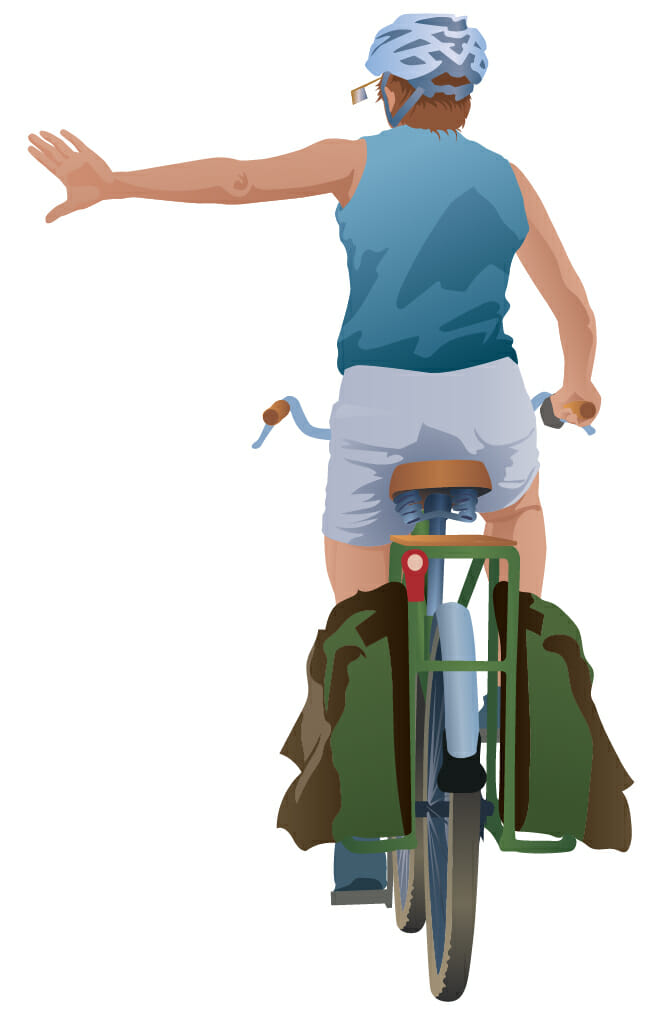
Passing motorists frequently misjudge speed and the distance needed to clear a slower bicyclist. The faster you go, the more likely they will misjudge the distance they will need to pass. It’s common for drivers to attempt to pass into a blind curve, or within a 100 feet of a stop sign. Some will do this even when you are traveling the speed limit! Don’t be afraid to put your arm out to discourage an unsafe pass. Learn control & release and powerful communication techniques in the CyclingSavvy Mastery Course.
Increased overtaking distance has implications for right hook crashes, as well. The faster you are traveling, the farther from the intersection a motorist will initiate a pass, thinking there is time. And then forget about you while you’re in his blindspot. Check out this windshield view video of a motorist passing a bicyclist on a class 1 ebike.
Implications for parallel bike facilities and high-speed bicycling
It’s fair to say that sidewalks, many side paths and bike lanes have stopping sight distances well below ebike speeds. If you can’t move left, the only way to improve your stopping sight distance is to reduce your speed.
It only takes one person to prevent a crash
It doesn’t matter who is at fault, you would rather not crash. Because of the increased stopping distance and likelihood of motorists misjudging your speed, there is an increased burden on a fast bicyclist to learn defensive practices and anticipate other people’s errors.
Our next ebike post will look at the benefits and risks of assisted acceleration.
Do you own a Pedego bicycle? Visit your Pedego Dealer for a free membership code. Pedego owners get the CyclingSavvy Basics Course and access to live member sessions, made possible by a sponsorship from Pedego Electric Bicycles.





An excellent resource page (and linked articles and information) not only for e-Bike riders, but also faster human-powered only cyclists!
Thank you CyclingSavvy for leading in this effort for especially e-Bike rider safety!!!